
A Fast, Natural-Looking Way to Restore Damaged Teeth
A chipped or broken tooth can happen in an instant — biting into hard candy, tripping, grinding teeth, or sustaining a small impact. Even a minor chip can make you self-conscious, irritate soft tissues, or disrupt your bite. Leaving a broken or chipped tooth untreated can also lead to further damage, decay, and long-term complications. At Downtown Dental Group in Manhattan, Kansas, Dr. Juliana Hall and Dr. Ben Reckmeyer use dental bonding repair to restore broken teeth quickly and effectively with tooth-colored composite resin that blends naturally with your smile.
Dental bonding is one of the most minimally invasive and cost-effective cosmetic dental procedures for repairing chipped teeth, improving oral health, and preventing future problems. A bonded tooth looks and feels like a natural tooth, allowing you to smile, chew food, and talk comfortably with no downtime.
If you need to fix a broken or chipped tooth, call our dental practice in Manhattan, Kansas at (785) 776-0097 to schedule an appointment.

Why Dental Bonding Is Ideal for Chipped or Broken Teeth
Dental bonding is often the treatment of choice for chipped teeth, small fractures, rough edges, and shallow breaks because it offers immediate results without removing natural tooth structure.
The benefits include:
• A quick, minimally invasive cosmetic procedure
• No drilling or enamel removal in most cases
• Tooth-colored composite resin that matches the color of your natural teeth
• Protection against further damage and decay
• A cost-effective alternative to porcelain veneers or dental crowns
• Strong adhesion for natural chewing function
• Faster and less complex than crowns, veneers, or implants
Bonding is especially useful for repairing damage to a front tooth, where appearance is important and the goal is to restore natural shape, symmetry, and aesthetics.
When Dental Bonding Is Recommended
Your dentist may recommend dental bonding for:
Chipped teeth
• A cracked tooth or shallow cracks
• Broken teeth with minor structural loss
• Rough, uneven, or sharp edges
• Small fractures not requiring a dental crown
• Damage that does not reach the nerve or roots
• Closing small spaces between teeth
• Cosmetic reshaping to improve symmetry
Dental bonding is not recommended for severe tooth damage or when the crack extends into the nerve or below the gumline. In those cases, a dental crown, root canal, or dental implant may be required. During your office visit, X-rays help determine whether bonding is the best treatment.
How Dental Bonding Repairs a Chipped or Broken Tooth
The dental bonding procedure is one of the simplest cosmetic dental procedures — but also one of the most effective. Repairing a chip or break typically takes under an hour per tooth and involves no discomfort.
A complete dental bonding repair at Downtown Dental Group includes:
Step 1: Exam and Shade Matching
The dentist examines the damaged tooth, evaluates the severity of the break, checks for decay, and ensures the chip or crack does not require additional treatment. A shade guide is used to select a resin color that matches the natural tooth perfectly.
Step 2: Preparing the Tooth
To help the bonding material stick, the dentist applies a conditioning liquid to gently roughen the surface. This process does not harm the enamel and enhances the bond between the resin material and the tooth.
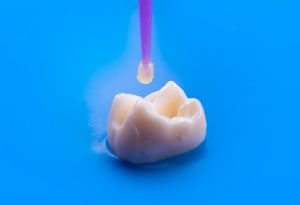
Step 3: Applying the Composite Resin
The dentist applies tooth-colored composite resin in layers, shaping it to match the natural contours of your tooth. This step is both artistic and precise, allowing the dentist to recreate the original tooth shape while improving overall appearance.
Step 4: Hardening With Ultraviolet Light
Once the resin is sculpted into the desired shape, a special ultraviolet light hardens the bonding material. This forms a durable, reliable bond that protects the remaining tooth structure.
Step 5: Shaping, Polishing, and Finishing
After the material is hardened, the dentist polishes the bonded tooth to create a natural shine and smooth finish. The bonded teeth blend seamlessly with your smile and feel identical to healthy teeth.
There is no recovery time. You can leave the dental office and continue normal activities immediately, though you may be advised to eat soft foods for the first day to avoid stressing the repaired tooth.
Dental Bonding vs. Other Cosmetic Dental Procedures
Many patients wonder whether they should choose bonding, veneers, or a dental crown. Each option has its place, but bonding offers several advantages.
Bonding vs. Veneers
- Bonding requires no enamel removal, while veneers use thin shells placed over the tooth.
• Bonding is more affordable and ideal for small cosmetic corrections.
• Veneers last longer but are more invasive and irreversible.
Bonding vs. Crowns
- Crowns completely cover the tooth and are better for severe tooth damage or deep fractures.
• Bonding is ideal for minor chips and cracks that do not require full coverage.
• Crowns require more tooth reduction, while bonding preserves natural enamel.
Bonding vs. Dental Implants
- Implants replace missing teeth entirely.
• Bonding is for damaged teeth that still have enough structure to be preserved.
• Implants are required only when tooth loss has already occurred or the remaining tooth cannot be saved.
Bonding provides a natural-looking, minimally invasive alternative to these treatments when the tooth’s structure is still healthy enough to support it.
Caring for Your Bonded Tooth
Bonded teeth are durable, but like natural teeth, they require proper dental care to stay strong and stain-resistant.
To protect your bonded tooth:
• Practice good oral hygiene — brush twice a day and floss regularly
• Avoid biting into hard candy, ice, or hard foods
• Eat soft foods if the repaired tooth feels sensitive right after treatment
• Rinse with warm salt water if soreness occurs
• Schedule routine checkups to monitor bonded teeth
• Avoid habits like nail-biting or chewing on pens
• Maintain regular dental cleanings
With proper care, bonding can last many years and help keep your mouth healthy while preventing further damage.
Emergency Dental Care for Broken or Chipped Teeth
A broken or chipped tooth should never be ignored. Even a small chip can leave a jagged edge that cuts the cheek or tongue, exposes dentin, or increases the risk of decay. Sharp edges can also stress other teeth or lead to gum inflammation.
Seek emergency dental care if:
A broken tooth causes severe pain
• The crack extends toward the root
• There is bleeding around the tooth
• You have difficulty chewing
• The damaged tooth feels loose
• Soft tissues are irritated by sharp edges
During the visit, the dentist may apply sterile gauze to control bleeding, take X-rays to assess the damaged tooth, and determine whether bonding, a crown, or root canal therapy is needed.

When Dental Bonding May Not Be Enough
Dental bonding is effective for minor to moderate chips and fractures. However, the dentist may recommend other treatments when:
- The break affects most of the remaining tooth
• The crack extends below the gumline
• Decay is extensive
• A root canal is necessary
• The tooth structure is too weak to support bonding
In these cases, a dental crown or veneer may offer stronger long-term protection.
Frequently Asked Questions
Bonding typically lasts several years with proper care, although longevity depends on habits, bite pressure, and oral hygiene.
Bonding is ideal for small to moderate chips or surface fractures. Severe damage may require a crown, veneer, or root canal treatment.
Yes. Tooth-colored composite resin matches the color of your natural teeth and blends seamlessly with your smile.
Restore Your Smile With Dental Bonding in Manhattan, Kansas
Dental bonding provides an excellent solution for repairing a broken or chipped tooth quickly, affordably, and beautifully. At Downtown Dental Group, Dr. Hall and Dr. Reckmeyer use advanced composite bonding techniques to restore the appearance and function of your natural teeth. If you’ve chipped a tooth or want to correct a minor break, call our Manhattan dental office at (785) 776-0097 to schedule your appointment and restore your smile with confidence.